
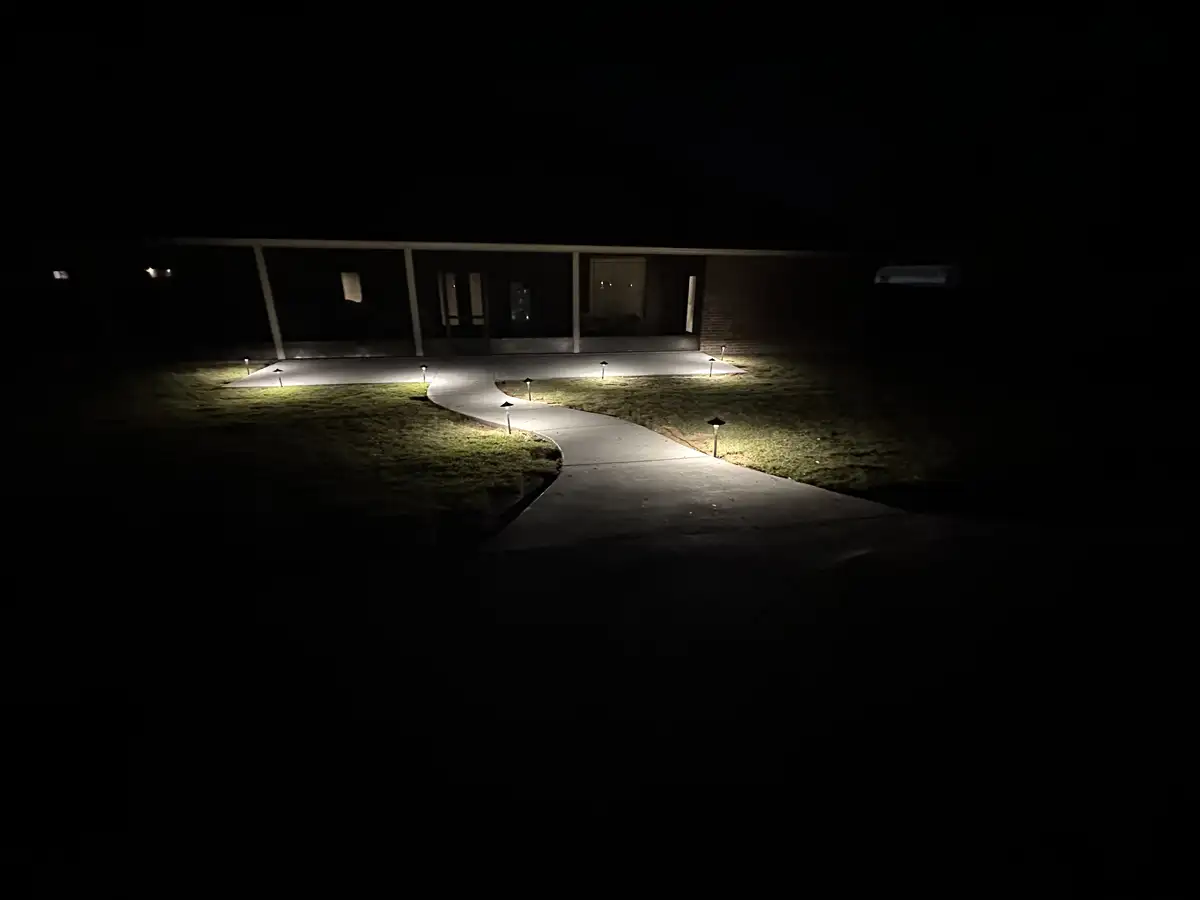
Extend Your Outdoor Living Hours
Landscape lighting doubles the usable hours of your outdoor space. A well-lit patio, walkway, and yard lets you entertain, relax, and enjoy your property long after the sun goes down — which in Northwest Florida means most evenings from April through October.
Beyond aesthetics, landscape lighting provides real security benefits. A properly lit property deters trespassing, illuminates entry points, and eliminates dark zones where someone could hide. Studies show exterior lighting reduces property crime by up to 39%.
Lighting also prevents trip-and-fall hazards along walkways, steps, and grade changes. This is especially important for properties with paver patios, retaining walls, or multi-level outdoor spaces where elevation changes are hard to see at night.

LED vs. Halogen Landscape Lights
We install LED fixtures exclusively. The advantages over halogen are significant enough that halogen no longer makes sense for any application.
LED Advantages
- Uses 75-80% less energy than halogen for the same light output
- Bulbs last 40,000-50,000 hours (15-20 years of typical use)
- Runs cool — no burn risk and no heat damage to plants
- Available in warm white (2700K) through daylight (5000K) color temperatures
- Instant on — no warm-up period
- Lower transformer load allows more fixtures per circuit
Halogen Drawbacks
- Burns out every 2,000-4,000 hours (1-2 years)
- Generates significant heat — can burn plants and melt landscape fabric
- Draws 4-5x more wattage per fixture, limiting fixtures per transformer
- Higher ongoing electricity costs (a 20-fixture system costs approximately $15-25/month vs. approximately $3-5 for LED)
- Corrosion-prone in Gulf Coast salt air
- Limited color temperature options
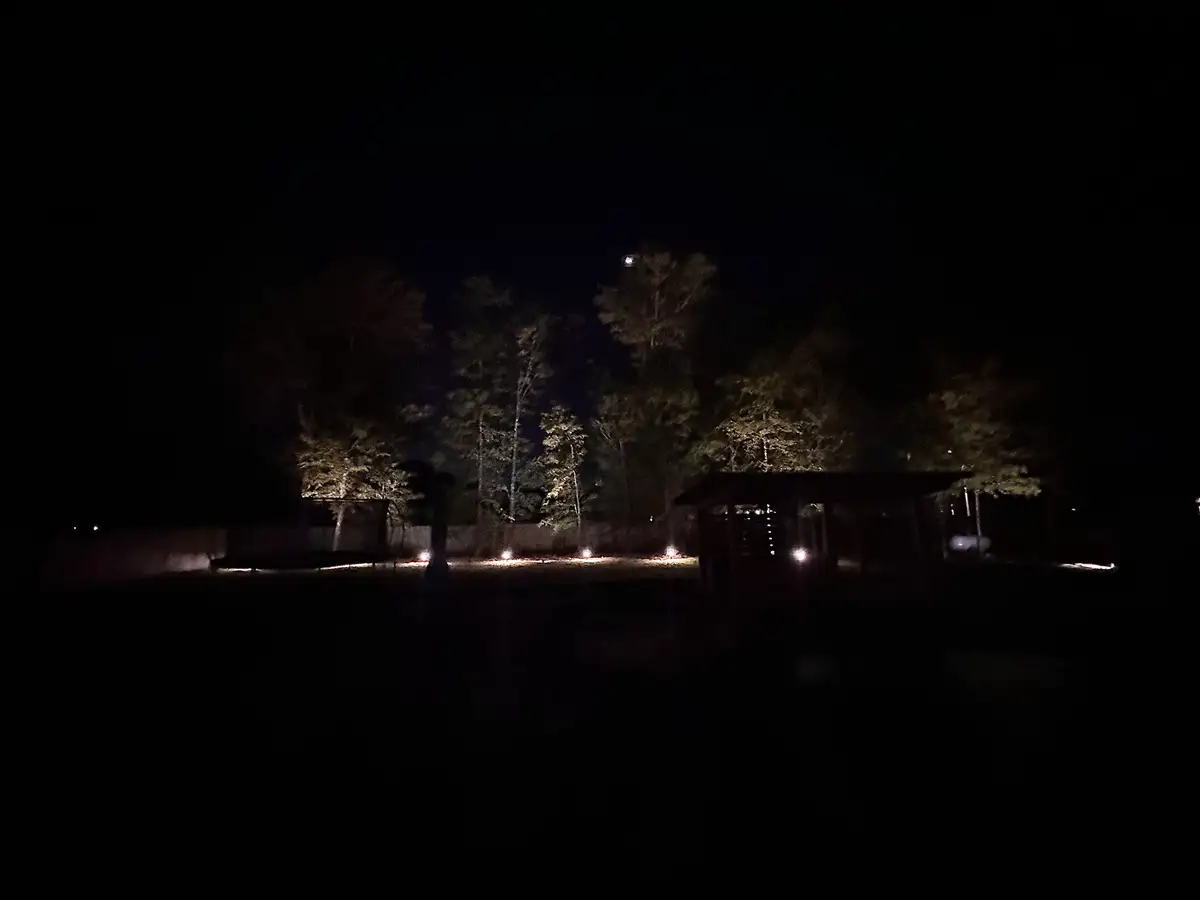
Types of Landscape Lighting We Install
Path lights line walkways, driveways, and garden borders. They cast a soft downward glow that defines edges without glare. Spacing is typically 6-8 feet apart. Best height is 14-18 inches.
Uplights (spotlights) aim upward to highlight trees, architectural features, and focal points. The dramatic effect of a well-placed uplight on a live oak or palm is the single biggest visual impact in landscape lighting.
Deck and patio lights mount to railings, step risers, posts, and under seat walls. They provide functional light for dining and socializing without harsh overhead illumination.
Wash lights cast a wide, even glow across walls, fences, or hedges. They create a soft ambient backdrop that makes the overall space feel inviting.
Hardscape lights recess into retaining walls, columns, and steps. They provide subtle accent lighting without visible fixtures.
Transformer Sizing and Wire Runs
Every landscape lighting system starts with a properly sized transformer. The transformer steps household 120-volt power down to safe 12-volt output. We size transformers based on total fixture wattage plus a 20% capacity buffer for future expansion.
A typical residential system with 15-25 LED fixtures draws 50-150 watts total and requires a 150-300 watt transformer. Larger properties with 40+ fixtures may need a 600-watt unit or multiple transformers on separate circuits.
Wire gauge matters. We use 12-gauge direct-burial landscape wire for main runs and step down to 14-gauge for short branch runs. Voltage drop over long wire runs causes dim fixtures at the end of the line — we calculate voltage at every connection point and use hub-and-spoke wiring layouts to keep all fixtures within 10.5-11.5 volts.
All wire connections use waterproof, gel-filled connectors rated for direct burial. We bury wires 6 inches deep in landscape beds and 12 inches deep where they cross lawn areas or driveways.
Timers, Smart Controls, and Automation
Every system we install includes an astronomical timer that automatically adjusts on/off times based on sunset and sunrise throughout the year. No seasonal adjustments needed — the timer knows when it gets dark in Pensacola.
For homeowners who want more control, we offer Wi-Fi-enabled transformers with smartphone apps. These let you turn zones on and off, dim individual circuits, set schedules, and control your lights from anywhere. You can dim the path lights while entertaining on the patio, or turn everything on when you are away for security.
Motion-activated zones are available for driveways, side yards, and entry points. These zones stay off until triggered by movement, then illuminate at full brightness for a set duration. The combination of always-on ambient lighting with motion-triggered security zones gives you the best of both worlds.
Monthly operating cost for a typical 20-fixture LED system is approximately $3 to $5. That is less than one gallon of gas per month to light your entire property every night.
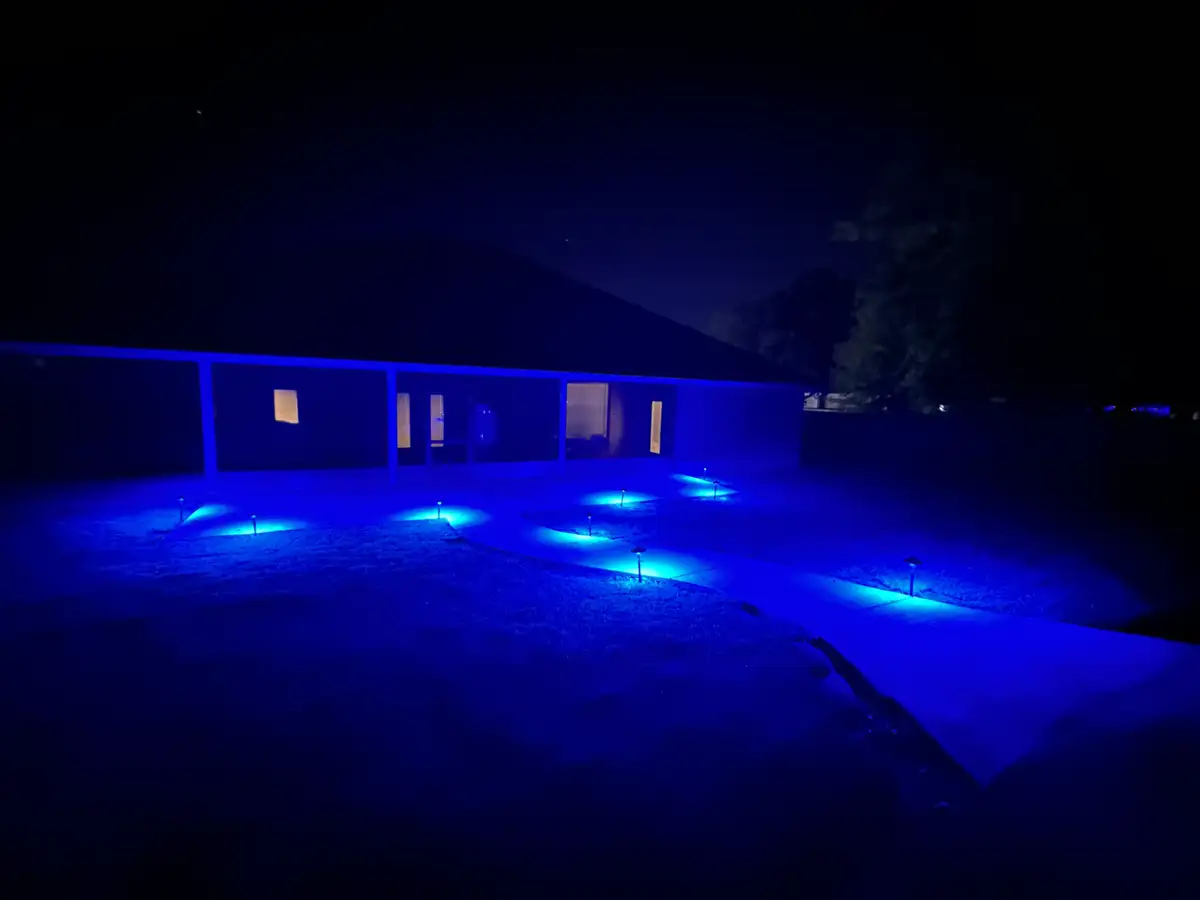
Energy Efficiency and Security Benefits
Low-voltage LED landscape lighting is one of the most energy-efficient upgrades you can make. A 20-fixture system uses less electricity than a single 60-watt incandescent bulb running for the same hours.
The security value is substantial. Properties with exterior lighting are significantly less attractive to burglars, vandals, and trespassers. Insurance companies recognize this — some offer premium discounts for properties with professionally installed exterior lighting.
Well-designed landscape lighting also increases property value. The National Association of Realtors estimates that landscape lighting delivers a 50-75% return on investment at resale. It is one of the first features buyers notice when viewing a home in the evening.
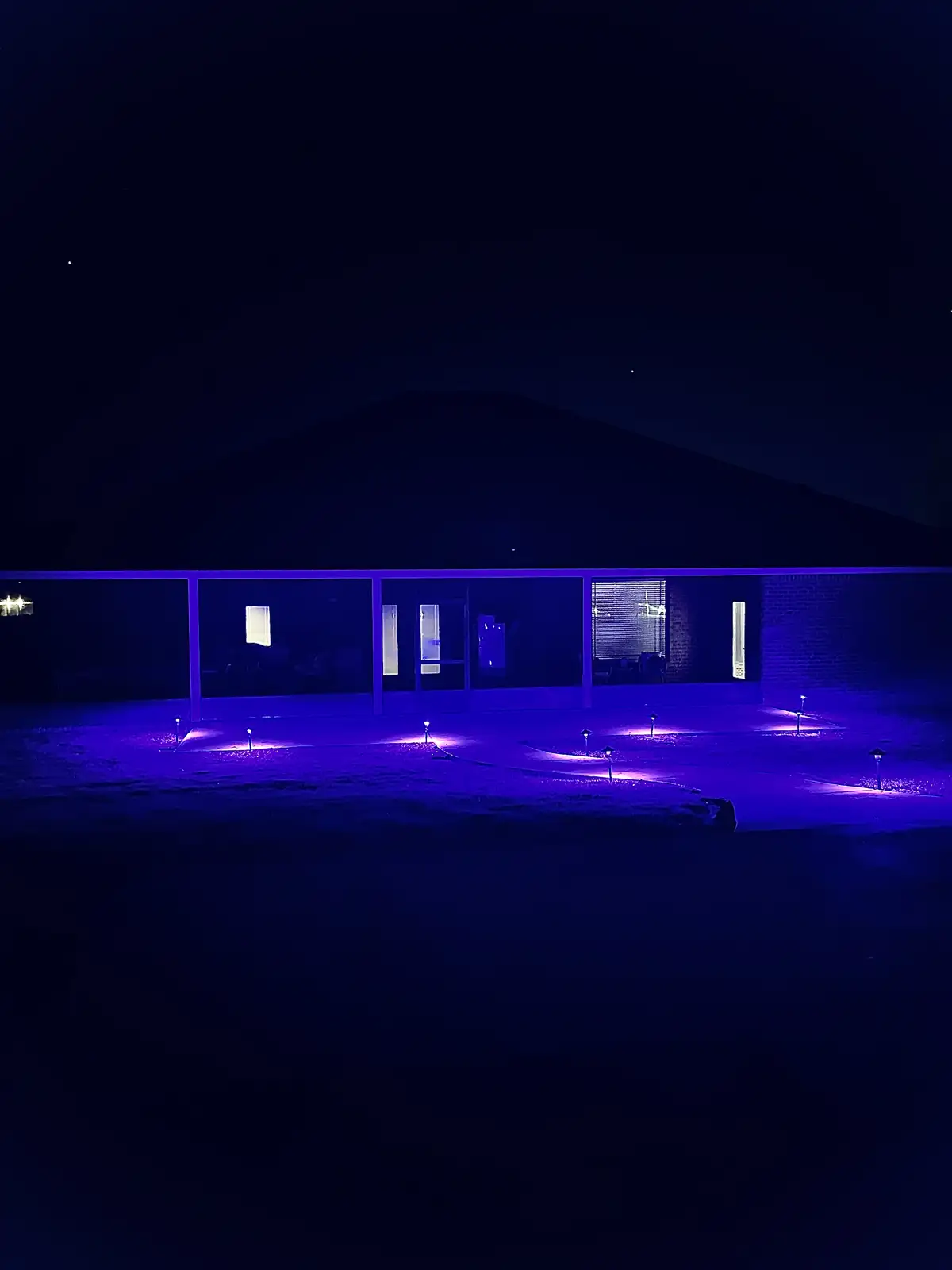
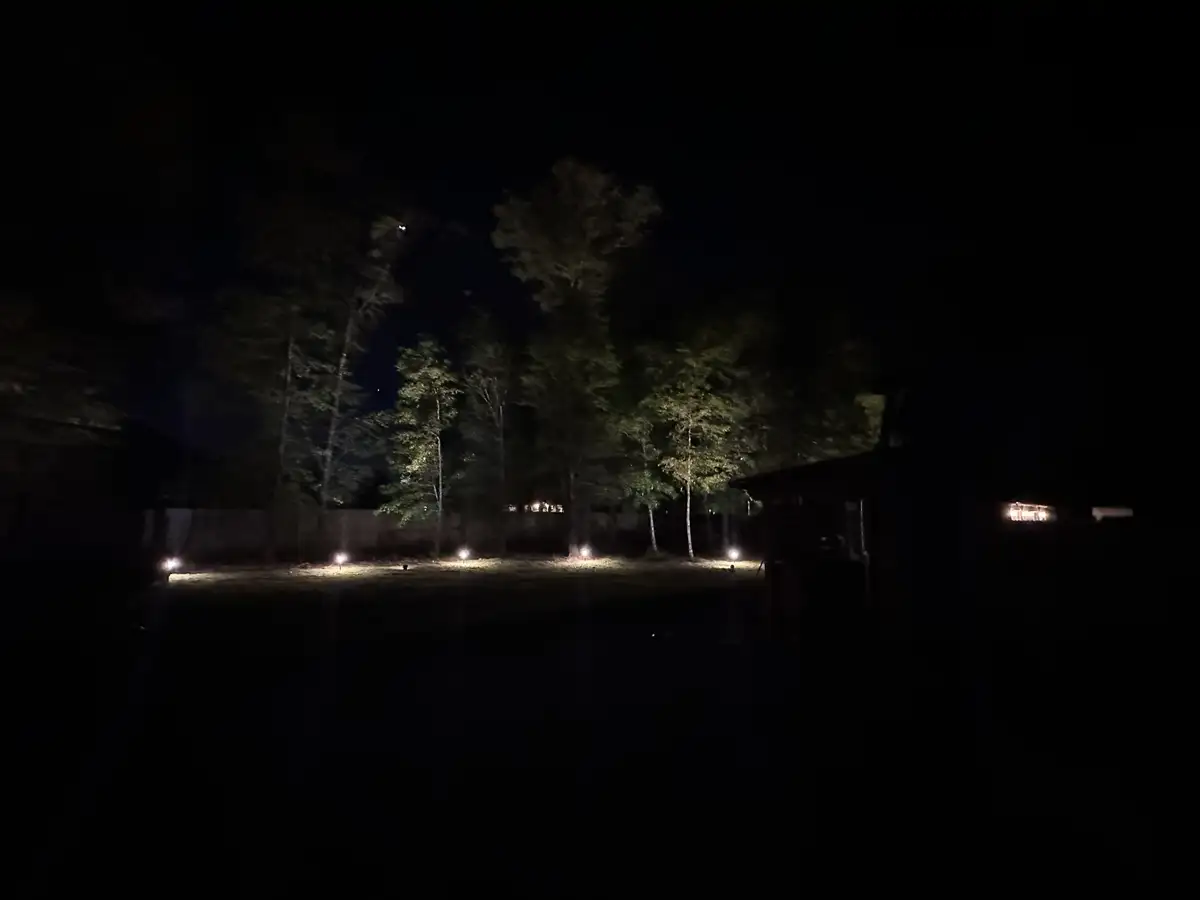
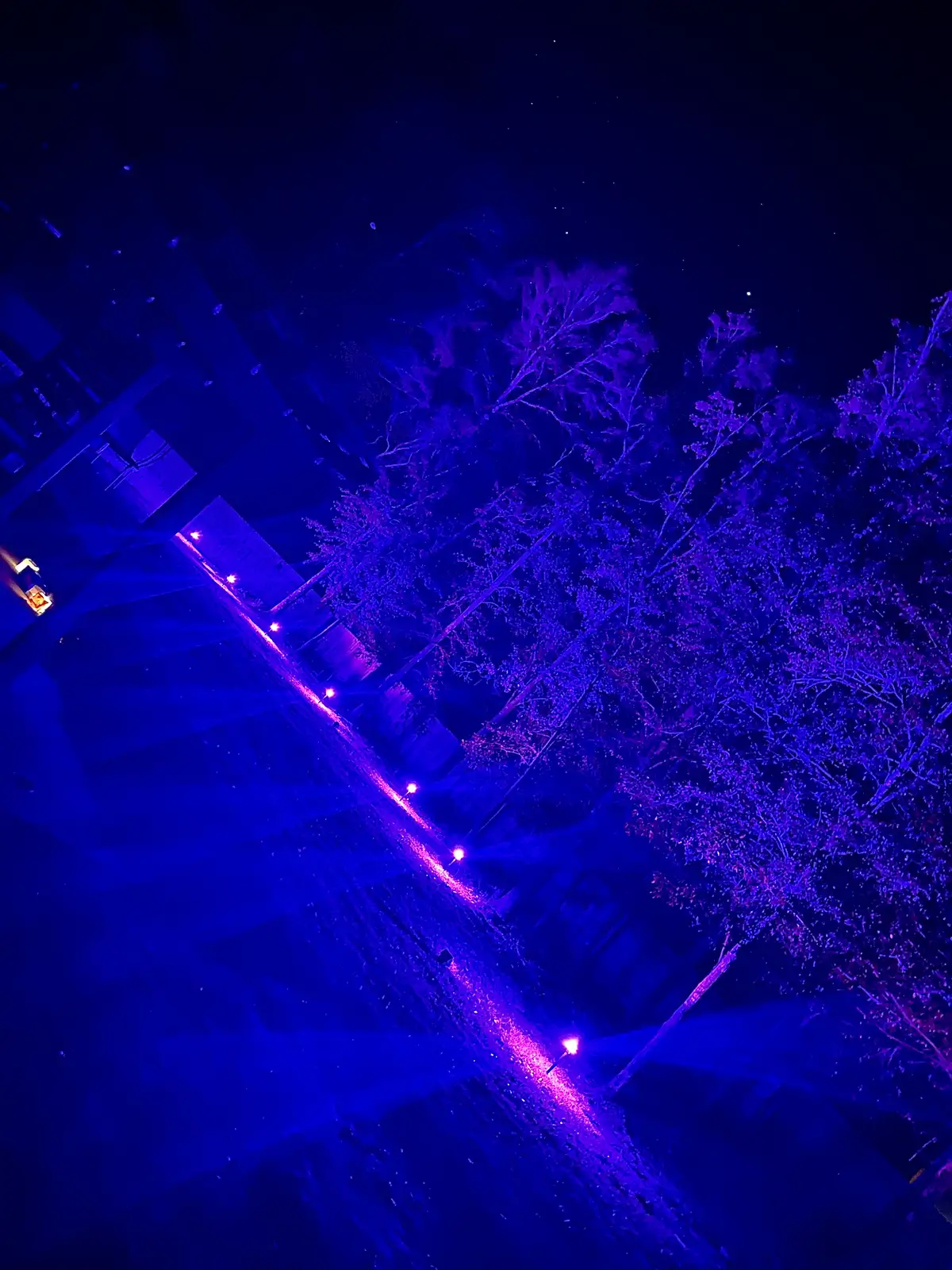
Landscape Lighting Projects
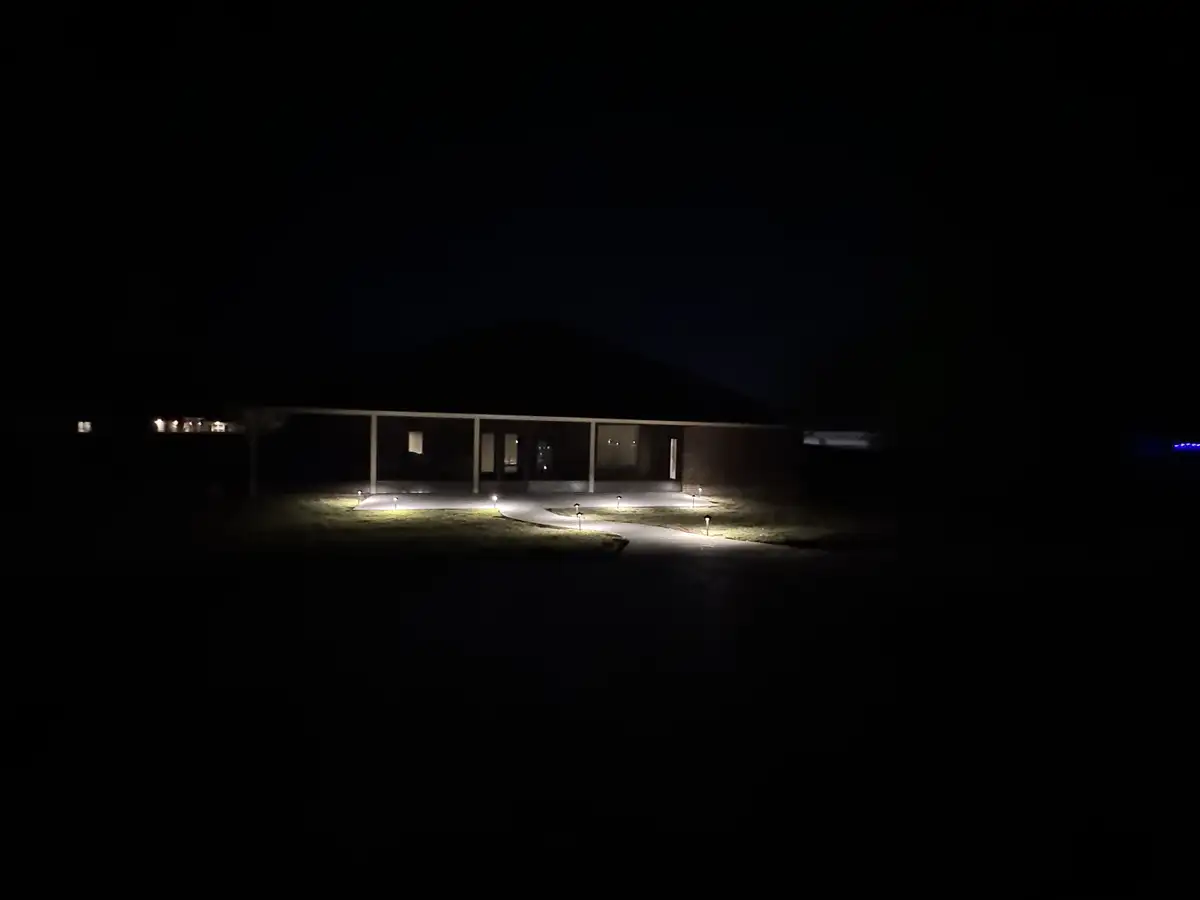
Services That Complement Landscape Lighting
Lighting works best when there is something worth lighting. These services create the features that make your lighting design shine.
Outdoor Living
Fire pits, outdoor kitchens, and pergolas that become even more dramatic with integrated lighting.
Learn More →Paver Patios
A paver patio with recessed step lights and perimeter uplighting creates the ultimate entertainment space.
Learn More →Landscaping
Mature trees, accent plants, and garden beds become focal points when lit from below.
Learn More →Landscape Lighting FAQ
A basic landscape lighting package with 8-12 LED fixtures, a transformer, and installation runs approximately $2,500 to $4,500. A full property lighting design with 20-30 fixtures, including path lights, uplights, and deck lights, typically costs approximately $5,000 to $10,000. Premium systems with 40+ fixtures, smart controls, and color-changing capabilities range from approximately $10,000 to $18,000+.
Quality LED landscape fixtures last 40,000 to 50,000 hours. Running 6 hours per night, that is 18 to 22 years before the LEDs need replacement. The fixtures themselves — housings, stakes, and lenses — typically last even longer if built from brass, copper, or marine-grade aluminum. We use commercial-grade fixtures rated for coastal environments.
Yes. Low-voltage landscape lighting operates at 12 volts — the same voltage as a car battery. There is zero shock risk, even if a wire is accidentally cut or exposed. This is why low-voltage systems do not require a licensed electrician or electrical permit. The only line-voltage work is plugging the transformer into an existing outdoor GFCI outlet.
Absolutely. We size every transformer with at least 20% extra capacity specifically for future expansion. Adding fixtures later is straightforward — we tap into existing wire runs or extend new branch lines from the hub. Most additions of 3-5 fixtures can be done in a single visit without modifying the existing system.
We recommend 2700K (warm white) for most residential landscape lighting. It produces a soft, inviting glow similar to candlelight that complements greenery and warm-toned materials. For modern or contemporary homes, 3000K provides a slightly cooler, crisper look. We never go above 4000K for residential — cooler temperatures look harsh and institutional in outdoor settings.
Request a Free Landscape Lighting Estimate
Fill out the form below and we will be in touch within 24 hours to discuss your project.