

Paver Patios Built for the Gulf Coast
A paver patio is the single best return-on-investment upgrade you can make to your outdoor space. Unlike poured concrete that cracks in Florida's shifting sandy soil, individual pavers flex with the ground and can be individually replaced if damaged.
We design and install paver patios for homes and businesses from Pensacola to Panama City Beach. Every project starts with a detailed site evaluation, including soil testing and drainage assessment, so the finished patio stays level and drains properly for decades.
Our installations include full excavation, compacted base material, leveling sand, edge restraints, and polymeric sand joints. No shortcuts. No settling. The base preparation alone takes more time than most contractors spend on an entire project.


Paver Materials for Every Style and Budget
Travertine pavers are the most popular choice for Gulf Coast patios. They stay cool underfoot in 95-degree summers, resist salt air corrosion, and develop a natural patina that looks better with age. Travertine is the premium option and delivers the best performance in coastal conditions.
Porcelain pavers offer a modern, low-maintenance alternative. They are virtually stain-proof, scratch-resistant, and available in wood-look, stone-look, and contemporary patterns. Porcelain requires zero sealing and holds up exceptionally well in high-traffic areas.
Concrete pavers deliver the widest range of colors and patterns at the most accessible price point. With proper sealing, they resist fading from UV exposure and hold up well in coastal conditions. Concrete is the most versatile option for creative designs.
Base Preparation for Florida's Sandy Soil
Northwest Florida's sandy soil is the number one reason patios fail. Without proper base preparation, pavers shift, sink, and create trip hazards within 2-3 years. Our installation process eliminates these problems before they start.
We excavate 8 to 12 inches below finished grade, depending on soil conditions. The excavated area gets lined with geotextile fabric to prevent base material from migrating into the sand below. We then install 6 to 8 inches of crushed limestone base in 2-inch lifts, compacting each layer to 95% density with a plate compactor.
A 1-inch layer of leveling sand goes on top, screeded to exact grade with built-in slope for drainage. Pavers are laid in the chosen pattern, cut to fit using a wet saw, and locked in place with aluminum or composite edge restraints secured with 10-inch spikes.
Polymeric sand fills the joints and is activated with water to create a flexible, weed-resistant bond. Proper drainage grading around the patio edge is built into every installation. The entire surface gets a final compaction pass to set the pavers into the sand bed.
Patio Designs That Fit Your Outdoor Space
Every paver patio we build is custom-designed for the property. There is no template. We consider your home's architecture, existing landscape, how you use the space, and your budget to create a design that works.
Popular Layouts
- Standard rectangle or square patios (most cost-effective)
- Freeform curved patios that follow natural landscape lines
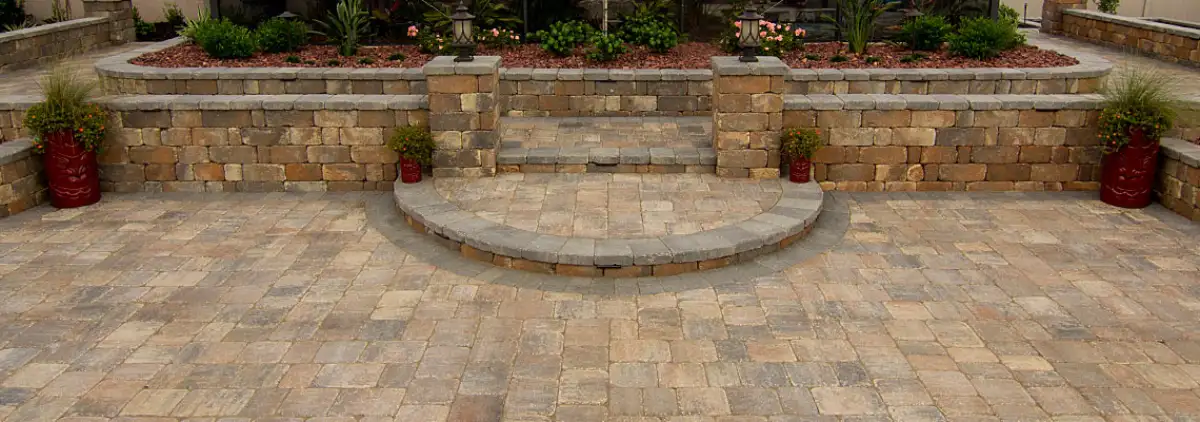
- Multi-level patios with steps connecting different outdoor living zones
- Wraparound patios extending from the back to the side of the house
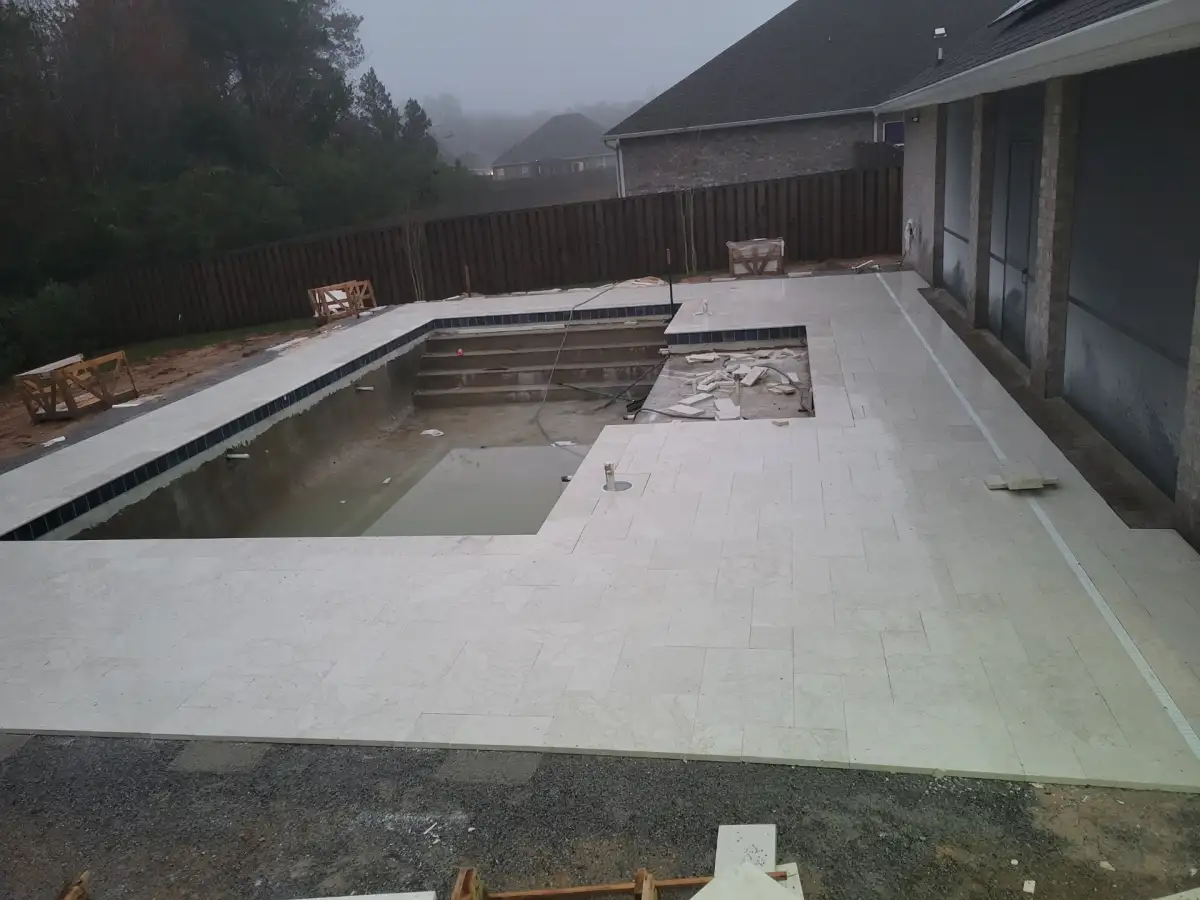
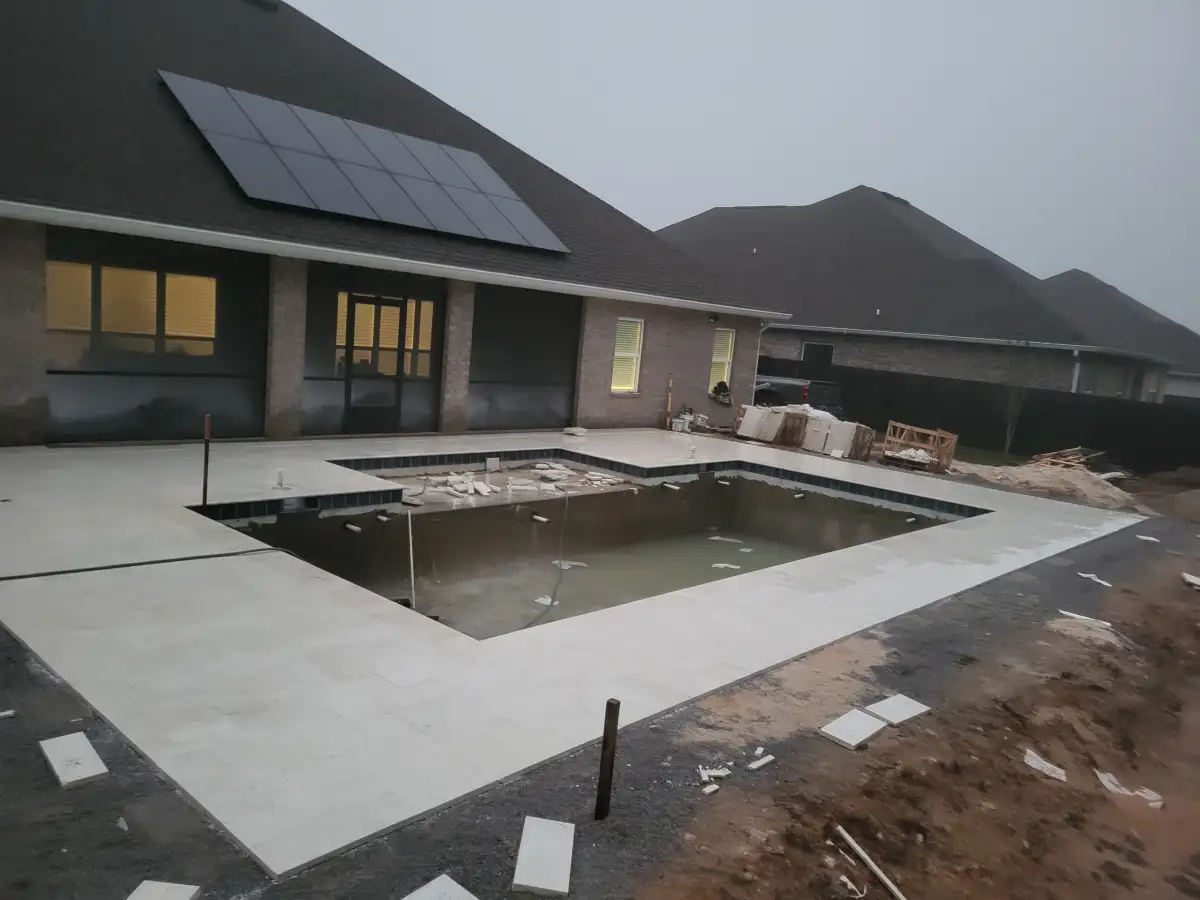
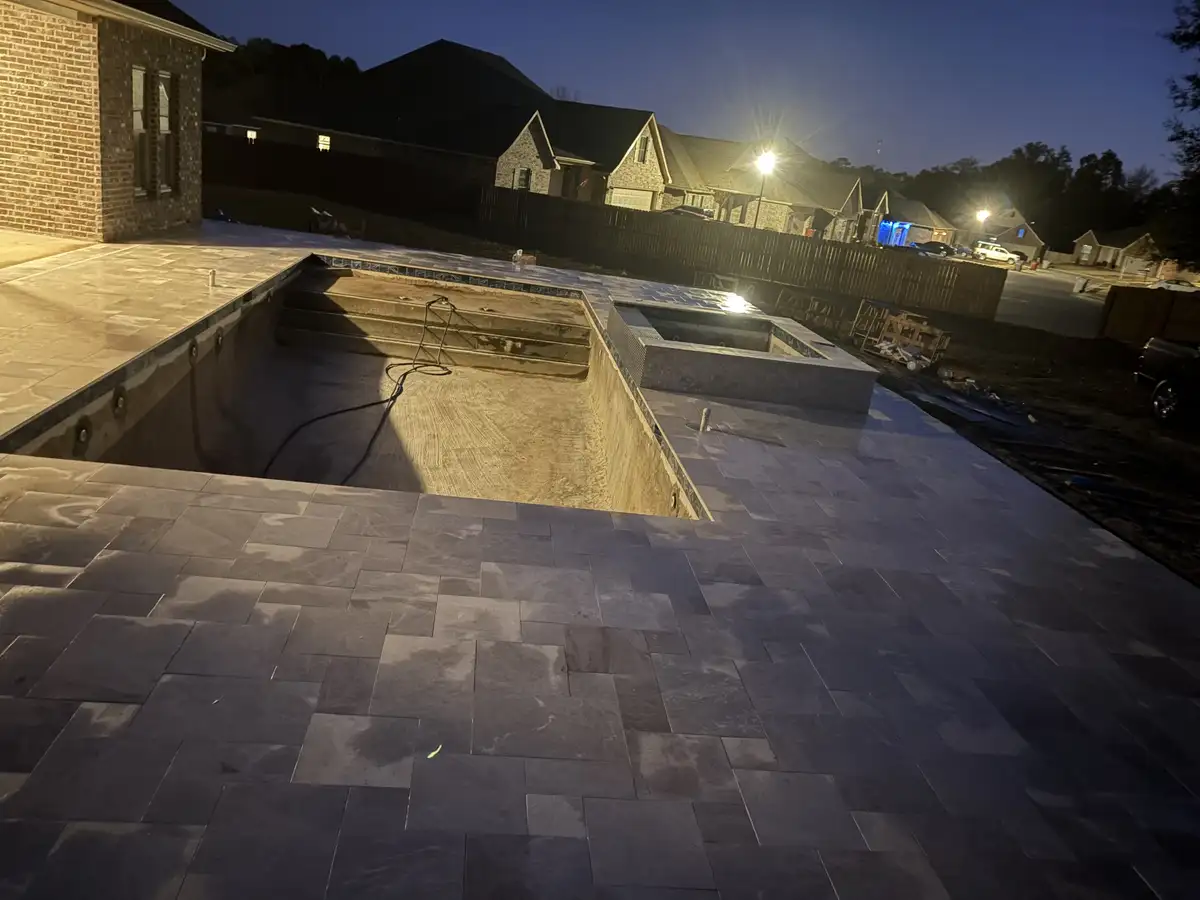
- Pool deck surrounds with non-slip, cool-touch pavers
Pattern Options
- Running bond (classic brick pattern, fastest to install)
- Herringbone (strongest interlock, ideal for driveways)
- Basketweave (traditional look, works well with square pavers)
- Random ashlar (natural stone appearance with multiple sizes)
- Circular patterns with a center medallion focal point
Drainage That Protects Your Investment
Pensacola averages 65 inches of rain per year — more than Seattle. Every paver patio we install includes drainage planning as a core part of the design, not an afterthought.
We grade every patio with a minimum 1% slope away from your home's foundation. For properties with existing drainage issues, we integrate French drains, catch basins, or channel drains directly into the patio design.
Permeable paver options are available for properties where local codes require stormwater management. These systems allow rainwater to filter through the paver joints into a gravel reservoir below, reducing runoff by up to 100%.
Need help with a broader drainage problem? Our drainage solutions service can address standing water, erosion, and grading issues across your entire property.

Paver Patio Maintenance Tips
A properly installed paver patio requires minimal maintenance. Sweep or blow off debris weekly. Rinse with a garden hose monthly to prevent dirt buildup in the joints.
Reapply polymeric sand every 2 to 3 years, or sooner if you notice sand erosion in the joints. This prevents weed growth and ant colonization between pavers.
Sealing is optional but recommended for travertine and concrete pavers. A quality penetrating sealer applied every 3 to 5 years enhances color, resists staining, and provides UV protection. Porcelain pavers do not need sealing.
If a paver cracks or chips, it can be individually removed and replaced without disturbing the surrounding surface. This is one of the biggest advantages pavers have over poured concrete.
Paver Patio Projects
Services That Pair with Your Paver Patio
Most of our patio clients add at least one complementary service to get the full outdoor living experience.
Retaining Walls
Add dimension and solve grade changes around your new patio with a structural retaining wall.
Learn More →Outdoor Living
Fire pits, outdoor kitchens, and pergolas that turn your patio into a complete entertainment space.
Learn More →Landscape Lighting
Extend your patio hours with low-voltage LED lighting for ambiance, safety, and security.
Learn More →Drainage Solutions
French drains and catch basins to handle stormwater and protect your patio investment.
Learn More →Paver Patio FAQ
Most residential paver patios take 3 to 7 business days from excavation to completion. A standard 300-400 square foot patio typically takes 3-4 days. Larger projects over 600 square feet, or those requiring extensive grading or drainage work, may take 7-10 days. Weather delays are common during Florida's summer rainy season.
Yes. Pavers outperform poured concrete in Florida's conditions for three reasons: they flex with sandy soil instead of cracking, individual pavers can be replaced without disturbing the rest of the surface, and they drain better because water passes through the joints. Poured concrete is cheaper upfront but typically develops cracks within 3-5 years in Northwest Florida's soil conditions.
Travertine is the best paver for pool decks. It stays 20-30 degrees cooler than concrete pavers in direct sun, is naturally non-slip when wet, and resists chlorine and salt water damage. Porcelain pavers with a textured finish are a close second. We recommend avoiding dark-colored concrete pavers around pools because they absorb heat and can become uncomfortable to walk on barefoot.
Standard ground-level paver patios typically do not require a building permit in Escambia or Okaloosa County. However, patios that include elevated structures, are near property lines or easements, or exceed certain size thresholds may need approval. We verify permit requirements for every project during the design phase so there are no surprises.
Polymeric sand is the most effective weed prevention. When properly installed and activated, it hardens in the joints and blocks weed seeds from germinating. We use premium polymeric sand on every installation. Reapply every 2-3 years as the sand naturally breaks down. Spot-treat any weeds that do appear with a vinegar-based herbicide rather than pulling, which can dislodge surrounding sand.
Ready for a New Paver Patio?
Get a free, no-obligation estimate for your paver patio project. We serve Pensacola, Destin, Fort Walton Beach, 30A, and the entire Gulf Coast.